
The Last Cut of the Season: How High Should You Cut Your Lawn Before Winter?
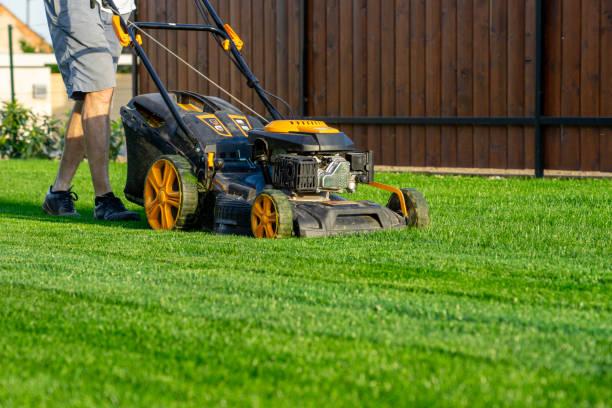
As autumn draws to a close and temperatures begin to fall, one question we often hear is: “When should I give my lawn its last cut, and how short should I cut it?”
Getting that final mow right can make a real difference to how your lawn copes with the colder, wetter months and how well it recovers when spring arrives.
At Avant Garde Lawns, we recommend moving away from the close summer cut as the growing season comes to an end and leaving the grass slightly longer for winter.
When Should You Make the Last Cut of the Season?
There isn’t really a fixed date for the final lawn cut.
In areas such as Stockport, Bramhall, Cheadle, Wilmslow, Poynton, Marple and South Manchester, mild autumn weather can mean grass continues growing well into November and sometimes beyond.
Rather than watching the calendar, watch your lawn.
As temperatures fall, grass growth will slow considerably. If conditions are mild and the lawn is still growing, it is perfectly reasonable to give it another light cut.
The important thing is to avoid mowing when the lawn is frozen, waterlogged or extremely wet. Mowing in poor conditions can compact the soil, damage the grass and leave unsightly wheel marks.
How High Should You Cut Your Lawn Before Winter?
For the final cuts of the year, raise the height of your mower.
As a general guide, we’d recommend leaving the grass approximately 40-50mm (4-5cm) high rather than giving it a very close cut.
The exact height will depend on the type and condition of the lawn, but the principle is simple:
Don’t scalp your lawn going into winter.
If you’ve been cutting your lawn very short during summer, gradually raise the mower rather than allowing it to become extremely long before suddenly cutting it back.
Why Leave Grass Longer During Winter?
There are several advantages.
1. More leaf area
Grass needs its leaves to capture light. During winter, daylight hours are considerably shorter, so leaving a little more leaf gives the grass a larger surface area for photosynthesis.
2. Better protection
Slightly longer grass provides more protection to the crown of the grass plant during periods of cold weather and frost.
3. A stronger lawn going into spring
A healthy lawn entering winter has a much better chance of recovering strongly once temperatures start rising again in spring.
4. It helps avoid scalping
Cutting too low can expose the soil and weaken the grass plants. Thin areas can then create opportunities for moss and weeds to establish.
But Don’t Leave It Too Long
Leaving the lawn longer does not mean letting it become overgrown.
Very long grass can become flattened by rain and wet weather, creating damp conditions around the base of the plant.
The aim is to find the balance:
Short enough to remain tidy, but long enough to protect the grass through winter.
For many domestic lawns, around 40-50mm is a sensible target for the final cuts.
Should You Cut the Lawn During Winter?
If we experience a mild winter, your lawn may continue to grow slowly.
There is nothing wrong with giving the lawn an occasional light trim if it needs one.
Choose a relatively mild, dry day when:
- The grass is dry
- The ground isn’t waterlogged
- There is no frost on the lawn
- Frost isn’t expected immediately after mowing
- The mower blades are sharp
Keep the mower set relatively high and remove only a small amount of growth.
Remember the One-Third Rule
A useful rule throughout the year is to avoid removing more than one-third of the grass blade in a single cut.
For example, if your lawn has reached around 60mm, don’t immediately scalp it down to 25mm.
Reduce the height gradually over successive cuts.
This places less stress on the grass and helps maintain a thicker, healthier lawn.
Clear Leaves From Your Lawn Too
Mowing isn’t the only job to think about as winter approaches.
Regularly remove fallen leaves from the lawn.
A thick layer of leaves can block light and trap moisture against the grass, potentially leaving weakened or bare areas underneath.
If you’re making your final cut, it’s a great opportunity to collect leaves and other debris at the same time.
Give Your Lawn the Best Start Next Spring
Your lawn doesn’t suddenly stop needing attention when summer ends.
The way it’s managed during autumn and winter can have a big influence on its condition the following spring.
A sensible final cut, combined with the right seasonal lawn treatments, can help your grass remain stronger through the colder months and put it in a much better position when active growth resumes.
Need Help With Your Lawn?
At Avant Garde Lawns, we provide professional lawn treatments throughout Stockport and surrounding areas, helping homeowners improve the health, colour and condition of their lawns throughout the year.
Whether you’re struggling with moss, weeds, compacted soil, poor growth or a tired-looking lawn, we can assess what’s happening and recommend the appropriate treatment.
Get in touch with Avant Garde Lawns to arrange a lawn assessment and find out how we can help get your lawn looking its best.
Why Choose Avant Garde Lawns?
At Avant Garde Lawns, we are a family-run business with over 20 years of experience helping homeowners achieve healthier, greener lawns.
What Makes Us Different?
✅ Family-run business
✅ Over 20 years’ experience
✅ City & Guilds NPTC qualified staff
✅ Professional products and equipment
✅ Friendly and reliable service
✅ Competitive pricing
✅ Local lawn care specialists
We take pride in delivering lawn care solutions that are effective, affordable, and tailored to the needs of your lawn.
Areas Covered
Ready to Transform Your Lawn?
If your lawn is suffering from moss, thatch build-up, or poor growth, our professional scarification service can help restore its health and appearance.